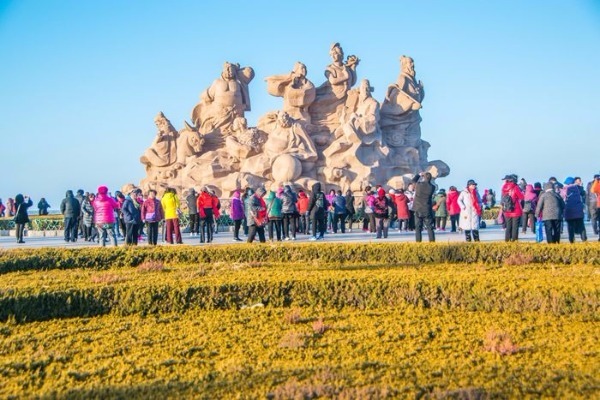
Eight Immortals Crossing the Sea
Introduction
The Eight Immortals Crossing the Sea (Ba Xian Guo Hai) is a popular mythological tale deeply rooted in Chinese Taoist folklore. The legend centers around eight revered deities, each possessing unique supernatural powers, who are prominent figures in Taoist culture. This story has inspired numerous cultural expressions, including paintings, operas, and other artistic endeavors throughout Chinese history.
Historical and Cultural Significance
The origin of the phrase Eight Immortals Crossing the Sea signifies overcoming obstacles through the combined strength and ingenuity of the group. Each immortal in the tale uses their unique abilities to traverse the perilous sea, symbolizing the idea that different strengths can lead to a shared success. This legend has become a cultural motif, emphasizing unity and the utilization of individual skills for the greater good.
The Eight Immortals Crossing the Sea has been depicted in various forms of Chinese opera and theater, reflecting the enduring popularity of the tale. Notably, the Peking Opera Theater of Hebei province includes the Eight Immortals Crossing the Sea among its repertoire, showcasing the continued influence of the story in traditional Chinese performing arts. The theater has a rich history, having been initially founded as the Jizhong Experimental Theater in 1945 before adopting its current name in 1994.
Depictions in Art and Performance
The tale has been immortalized in Chinese art, most prominently through paintings and murals. One notable depiction is the wall painting in Lyuzu Hall at Chunyang Palace in Taiyuan, Shanxi province. This Taoist temple, with its storied history dating back to the Yuan Dynasty (1271-1368), features a striking portrayal of the Eight Immortals Crossing the Sea, illustrating its significance in religious and cultural contexts.
In addition to visual art, the story has been a focal point in traditional performances. For instance, the Yantai Municipal Peking Opera Troupe, with roots tracing back to the late Qing Dynasty (1644-1911), has staged the Eight Immortals Crossing the Sea as part of its extensive repertoire. This troupe is renowned for staging high-quality traditional and modern plays, contributing to the perpetuation of this mythological tale through Peking Opera.
Modern Interpretations and Cultural Impact
In contemporary times, the legend continues to captivate audiences. The Eight Immortals Crossing the Sea Scenic Area in Penglai, Shandong province, serves as a tribute to this ancient legend. The site features an on-site cinema that showcases footage of rare Fata Morgana phenomena, linking the mythical aspects of the story to the natural wonders of the region. This attraction underscores the tale's enduring legacy and its ability to enchant new generations.
The legend also finds reflections in modern communal activities such as the vibrant boat racing tradition in Zhujiajiao, Shanghai. Boats adorned with motifs of Eight Immortals Crossing the Sea participate in races, merging local traditions with mythological symbolism. This integration of cultural narratives with social customs illustrates the tale's versatility and its enduring place in Chinese cultural consciousness.








